 In one minute
If you are a Nova Scotia nonprofit or charity, the Student Summer Skills Incentive (SKILL) is your primary funding source for summer staff.
The Grant: Up to $10.50/hour wage subsidy (plus bonuses for diversity) for returning students.
The Deadline: January 31, 2026.
The Critical Step: You must apply via LaMPSS. If you don’t have an ID, register today—it takes up to 5 days to process.
While federal programs like Canada Summer Jobs get the national headlines, Nova Scotia’s SKILL program is the reliable workhorse for the local community sector. It offers predictable wage support to hire university and college students for meaningful, career-related roles.
But the window is tight. You have until January 31 to submit your 2026 application. Here is how to lock in your funding without getting screened out.
Is This Grant for You?
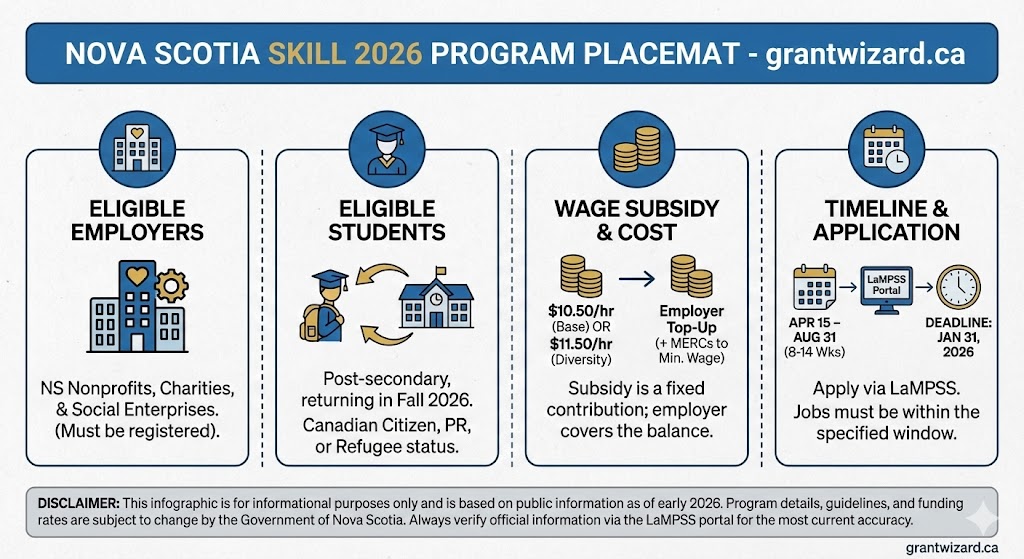
This program is specifically designed for the social sector. You are eligible if you are a registered nonprofit, charity, or social enterprise in Nova Scotia.
Unlike some federal streams, SKILL is strict about the “Student” definition. The hire must be a post-secondary student returning to studies in the fall (unless it is a co-op placement). If you are a private business, this stream isn’t for you—look at the Co-op Education Incentive instead.
The Funding Formula
SKILL is a wage subsidy, not a 100% grant. You need to budget for the difference between the subsidy and the actual wage.
Base Subsidy: $10.50 per hour.
Diversity Bonus: $11.50 per hour if you hire a student from a designated equity group (Mi’kmaq/Indigenous, African Nova Scotian, visible minority, or person with a disability).
Your Cost: You must pay at least the provincial minimum wage. You cover the “top-up” plus roughly 15-18% for MERCs (CPP, EI, Vacation Pay).
 Reviewer Lens: Focus on “Career Relevance”
Provincial reviewers scan applications for skill development, not just labour. They want to see that the job helps a student enter the workforce.
Pro Tip: Avoid generic job titles like “General Help.” Upgrade them to “Project Assistant” or “Community Coordinator.” Your job description must list specific transferable skills the student will learn, such as digital literacy, project management, or client relations.
 The 2026 Application Checklist
The LaMPSS portal is robust but unforgiving. Use this checklist to clear the submission hurdle before the deadline.
[ ] Test LaMPSS Access: Log in immediately. If your account is dormant or you lost your password, resolving this can take days.
[ ] Confirm Dates: Your position must sit between April 15 and August 31, 2026, for a duration of 8–14 weeks.
[ ] Check Cashflow: Confirm you have the funds to pay wages upfront (SKILL reimburses you later).
[ ] Draft the Mentorship Plan: Write 2-3 sentences on who will supervise the student. Funders reject “unsupervised” remote roles.
[ ] Submit: Hit the button before midnight on Jan 31.
 Frequently Asked Questions
Q: Can I stack SKILL with Canada Summer Jobs? A: Generally, no. You cannot claim two government sources for the same hours worked. Most orgs run them consecutively (e.g., SKILL for May/June, CSJ for July/Aug) to extend the season.
Q: When will I get a decision? A: Approvals typically go out in late March or April. Do not promise a student the job until you have the signed agreement in LaMPSS.
Q: Can I hire an international student? A: No. For SKILL, the student usually must be a Canadian citizen, permanent resident, or have refugee status.
Next Steps
If you are wrestling with LaMPSS or trying to figure out if your budget allows for the top-up, we can help you verify the math.
 Need a hand? Our Rapid Grant Rescue service can review your job description and budget to ensure you don’t get screened out on a technicality.