Every January, confusion reigns in Ontario’s nonprofit sector. Two programs with nearly identical names launch at the same time, but only one provides funding to your organization.
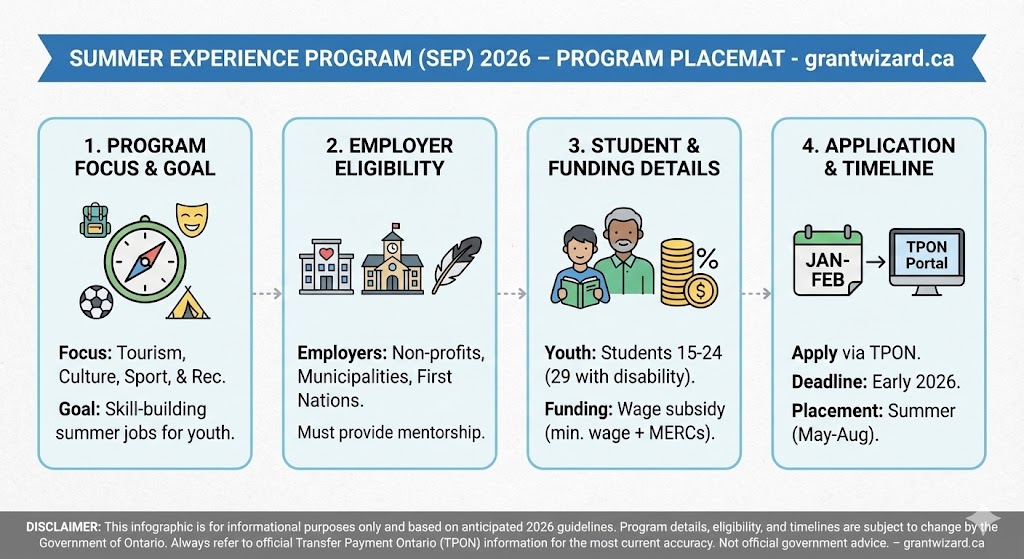
If you are a nonprofit, municipality, or Indigenous organization looking for wage subsidies to hire summer students, your target is the Summer Experience Program (SEP).
Here is how to navigate the 2026 cycle before the window closes.
Who is this for?
Nonprofits & Charities in Ontario (focus on tourism, culture, heritage, sport, or recreation).
Municipalities looking for subsidized summer staff.
Indigenous Organizations/Communities creating youth employment.
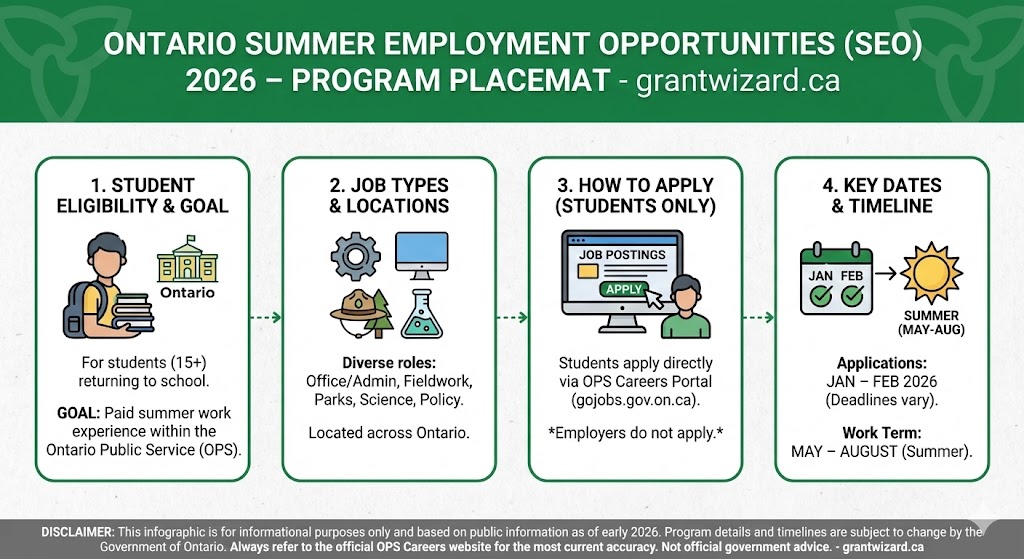
The Two Programs: Don’t Mix Them Up
| Feature | Summer Experience Program (SEP) | OPS Summer Employment Opportunities (SEO) |
| The Goal | Grant Funding. You get money to hire a student. | Direct Hiring. The Province hires the student. |
| Who Applies? | You (The Employer). | The Student. |
| Where to Apply? | Transfer Payment Ontario (TPON). | OPS Careers Website. |
| Verdict |  Apply here if you need staff. Apply here if you need staff. |  Ignore this (unless you are a student). Ignore this (unless you are a student). |
The 2026 SEP Application Checklist
The deadline is strict. Use this checklist to clear the submission hurdle by January 14, 2026.
[ ] Access Verified: Log in to Transfer Payment Ontario (TPON) immediately. If your account is dormant, reactivation can take days.
[ ] Eligibility Check: Confirm your role focuses on tourism, culture, sport, or recreation.
[ ] Student Constraints: Ensure you can offer the required weeks (typically ~30–35 days of work) between April and September.
[ ] Supervision Plan: Draft a 3-sentence summary of who will mentor the student. (Funders hate unsupervised roles).
[ ] Safety Protocols: Confirm you have liability insurance and safety policies (WSIB) in place.
 Frequently Asked Questions
Q: Can I stack SEP with Canada Summer Jobs (CSJ)? A: generally, no. You usually cannot use two government funding sources to pay for the same hour of work. However, you can sometimes use them for consecutive periods (e.g., CSJ for July/August, SEP for May/June). Check the specific 2026 guidelines carefully.
Q: How much funding do I get? A: SEP typically covers the provincial minimum wage plus a portion of MERCs (Mandatory Employment Related Costs) for a set number of hours. Expect approximately $3,800–$4,000 per position.
Q: When will I know if I got the funding? A: Notifications usually go out in early April. Do not promise a student the job until you have the signed agreement.
Q: What if I miss the January 14 deadline? A: There is rarely an extension. If you miss it, you will likely have to wait until the 2027 cycle.
What to do next
If you have a draft started but are stuck on the narrative or compliance checks, we can help you cross the finish line before the 14th.
 Need a hand? Check out our Rapid Grant Rescue service. We triage your draft, fix eligibility gaps, and get it portal-ready in 48 hours.